New accelerated bridge program fast-tracks registered nursing school for working licensed practical nurses
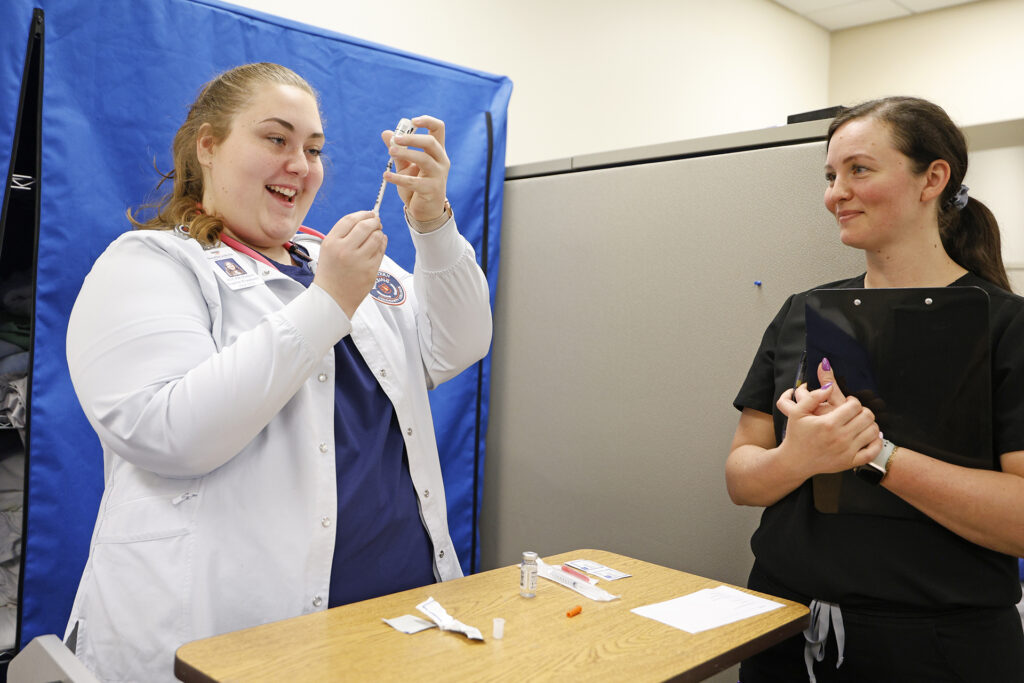
Southeastern Community College will launch its Licensed Practical Nurse to Associates Degree Nurse Transition Program this summer to help address Columbus County’s shortage of registered nurses. This accelerated program will turn working licensed practical nurses (LPNs) into registered nurses (RNs) in three semesters. Detra Edwards, nursing instructor and program coordinator, said the need for the program grew from a widening gap in the local healthcare workforce.
“Columbus County and the surrounding areas have large vacancies for RN positions,” Edwards explained. “This program will help close those gaps in vacancies in our area and up-skill our practicing LPNs.”
Tammy Faulk, SCC’s Director of Nursing, said that a High-Cost Program Start-Up Grant from the North Carolina Community College System provided funding for this new bridge program. She explained that the grant included a salary for the program coordinator position and funding for new equipment.
Edwards will oversee the program while also teaching in the classroom and clinical settings. She said helping current LPNs advance their careers is both professionally and personally meaningful.
“Watching this new program develop and grow is truly a blessing,” Edwards said. “As an SCC graduate who also attended Columbus County Schools, I am able to give back to Columbus County by helping others further their educational and career goals.”
Watching her students make progress through the nursing program is one of the most rewarding parts of her role, Edwards said.
“Seeing them have those ‘Ah‑ha’ moments, then finally reaching their goals of becoming nurses, is truly the best reward,” Edwards explained. “In this role, I am looking forward to more moments like these, but watching families prosper and reach new opportunities by making that transition from LPN to RN.”
The program formed in response to feedback from healthcare stakeholders who reported an oversaturation of LPNs and an increasing need for practice‑ready RNs. Edwards said the goal was to create a path that allows working LPNs to earn an ADN without stepping away from their jobs.
“I’m excited to see how the program will support the local healthcare industry and strengthen our economy,” Edwards said. “The interest in this program is astounding, and I’m excited to help these LPNs reach their goals,” she said.
The new program is expected to increase the number of RNs entering the local workforce each year. Edwards said the flexible design will give many LPNs an opportunity they otherwise would not have.
“Most LPNs work during the weekdays, which are not conducive to a traditional ADN program,” Edwards explained. “These new ADN graduates will become RNs that will fill the open positions in Columbus County and the surrounding areas.”
The new LPN-ADN Transition Program will be offered in a Hy-Flex format, which is a new option for the SCC nursing courses. The classroom is equipped with cameras and microphones that record instructor lectures and discussions with the students. LPNs can choose to attend class in person, join live online from a remote location or complete later as their schedule permits. All lab sessions will be done in person on campus. This approach makes it easier for working nurses to balance their jobs, family life and school while moving forward toward their ADN.
“The grant also allowed us to purchase new equipment to enhance our nursing classroom teaching with one of the most exciting additions being our new Lifecast manikins,” Faulk said. “They are incredibly life-like and allow us to create realistic bedside clinical moments right in the classroom.”
Our partner’s perspective
“An LPN‑to‑RN program can significantly benefit Columbus Regional Healthcare System and the community as a whole by strengthening its nursing workforce and improving patient care,” said Megan Sargent, Chief Nursing Officer at CRHS. “By supporting LPNs in advancing to RN roles, CRHS builds a pipeline of skilled nurses who already understand its systems, culture and patient population, reducing onboarding time and turnover costs.”
Sargent explained that RNs have a broader scope of practice and can manage more complex patient needs, while increasing the number of RNs on staff improves care quality, patient safety and staffing flexibility across units. She said that offering career advancement opportunities boosts employee morale, engagement and retention, helping create a more stable and committed workforce.
“This investment in local talent also enhances the hospital’s relationship with the community by promoting workforce development and creating pathways for residents to grow within the healthcare system,” Sargent said. “We are excited to partner with SCC on this new venture.”
Applications for the first class of the LPN-ADN Transition Program are open now until April 15. Click here to apply!