SCC Phlebotomy and MLT programs earn 10-year accreditation
Southeastern Community College’s Phlebotomy and Medical Laboratory Technology programs received 10 years of continuing accreditation from the National Accrediting Agency for Clinical Laboratory Sciences. Accreditation for both programs extends through Oct. 31, 2036. NAACLS issued the accreditation awards Sept. 25, 2026.
“This accreditation gives assurance to our students, our community and our healthcare partners that Southeastern Community College is invested in our programs and that our instructors and programs meet the highest standards of quality and excellence,” Dr. Brandon Jenkins, executive vice president and chief academic officer, said. “Students can have confidence that the knowledge and skills they learn at SCC will equip them for success in the workplace and beyond.”
Jessica Hill, dean of nursing and healthcare training, said SCC’s MLT and Phlebotomy programs had maintained national accreditation for many years. She said the new accreditation period reflected the college’s continued focus on educational quality.
“National accreditation signals a mark of excellence in educational programs,” Hill said. “The 10-year reaccreditation of both programs highlights the value we place on educational excellence at SCC.”
Accreditation can help graduates pursue professional credentials and enter the workforce. Hill said the NAACLS designation showed employers that SCC graduates had completed programs reviewed according to national standards.
“NAACLS accreditation ensures that our students are receiving a quality education in MLT and Phlebotomy, opens doors for credentialing opportunities for graduates and signifies for employers that graduates received top-notch training in preparation for the workforce,” Hill said.
Hill credited Dawn Williamson, director of the MLT and Phlebotomy programs, and Tanya Bellamy, phlebotomy instructor, with preparing students for certification and employment. Hill said graduates from both programs had achieved 100% first-time pass rates on national certification exams. “They do more than teach technical skills,” Hill said. “They build confidence, inspire professionalism and prepare students to enter the healthcare workforce ready to succeed.”
Williamson said the MLT program had maintained a 100% board pass rate and employment rate for more than 10 years. She said reaccreditation validated the quality of the program’s instruction while helping faculty evaluate and improve the curriculum.
“NAACLS accreditation validates the quality of education and training that our students receive,” Williamson said. “It demonstrates that our program meets nationally recognized standards for medical laboratory education and that we are preparing graduates to enter the workforce.”
MLT students followed academic, technical and professional standards designed to prepare them for work in medical laboratories. Their training focused on accuracy, critical thinking, laboratory safety, quality control, communication, ethical conduct and patient confidentiality.
“Medical laboratory testing requires accuracy, attention to detail, critical thinking and accountability because the results generated in the laboratory directly impact patient care,” Williamson said. “We want our students to graduate with more than just the ability to perform laboratory tests. We want them to understand the responsibility that comes with being a healthcare professional.”
Graduates of SCC’s NAACLS-accredited MLT program are eligible to pursue the MLT(ASCP) Board of Certification exam. Williamson said certification could help graduates find employment in hospitals, physician office laboratories, reference laboratories and other healthcare settings.
“Graduating from a NAACLS-accredited program provides students with an important advantage when entering the job market,” Williamson said. “It establishes that they have completed an educational program that meets nationally recognized standards and prepares them for national certification.”
Medical laboratory technicians produce results that healthcare providers use to diagnose diseases, monitor treatments and make patient care decisions. Williamson said employers needed MLTs who understood accuracy, safety, quality control and established laboratory procedures.
“Hiring graduates from accredited programs gives employers confidence that those graduates have received comprehensive training and have been educated to meet the expectations of the profession,” Williamson said.
Bellamy said reaccreditation affirmed the quality of SCC’s Phlebotomy program and supported continued evaluation. She said the designation also showed students and community members that the program met national educational and professional standards.
“Reaccreditation affirms that our Phlebotomy program has undergone an external review by a national agency and continues to meet established educational and professional standards,” Bellamy said. “It also supports ongoing program evaluation and improvements, helping us prepare students for the responsibilities of being a phlebotomist.”
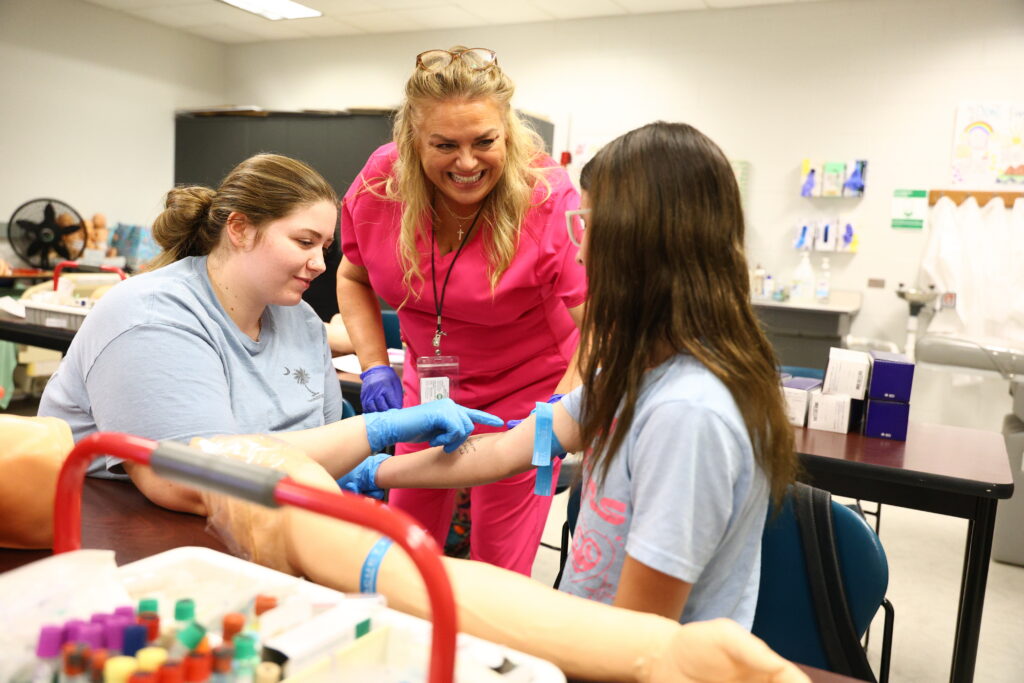
Phlebotomy students learned to follow safety procedures and provide professional patient care. Their training included patient identification, communication, infection control, specimen collection, labeling and handling.
“I expect students to demonstrate safe, accurate and professional practice,” Bellamy said. “Students must also show respect, confidentiality, sound judgment and competence in both classroom learning and hands-on practice. It is our integrity and skill that sets us apart from others.”
Graduating from a NAACLS-accredited phlebotomy program can help students pursue certification and employment. Bellamy said accreditation showed employers that graduates had completed training reviewed according to national standards.
“Accreditation can strengthen a graduate’s qualifications and knowledge, making them a more likely candidate for hire,” Bellamy said. “Employers know our graduates have a solid foundation in skills, patient care, safety, specimen quality and professional conduct.”
Williamson and Bellamy enjoy watching students develop their skills, gain confidence and begin their careers.
“My favorite part of teaching MLT is watching students grow from individuals who may have never stepped into a medical laboratory into confident professionals who understand the importance of what they do,” Williamson said. “There is nothing more rewarding than seeing a former student succeed and knowing I played a small part in helping them get there.”
Bellamy values seeing students apply their classroom lessons in healthcare settings.
“My favorite part of teaching phlebotomy is watching the students grow from feeling unsure to becoming confident, careful and compassionate professionals,” Bellamy said. “It’s especially rewarding to see them connect what they have learned in class with the responsibility of caring for real patients and getting the job they had hoped for.”
SCC plans to offer MLT 110: Introduction to MLT during the spring semester. The hybrid course will combine online lectures with laboratory sessions on campus. The course will introduce students to medical laboratory technology and laboratory work. Williamson said that phlebotomy is one of SCC’s “Career in a Year” programs that is one semester long and is offered each spring and fall.
NAACLS required SCC to continue evaluating student outcomes and using feedback from graduates and employers to guide program improvements. The college must submit an interim report by Oct. 1, 2030, followed by a self-study report by Oct. 1, 2035. The reports will show how the programs continue to meet the accrediting agency’s standards.
Interested in a phlebotomy or MLT career? Contact Dawn Williamson at 910-788-6377 or [email protected] to learn more. To register for a class, contact Student Services at 910-788-6247 or stop by A-building on campus.
The MLT and Phlebotomy programs at SCC are accredited by the National Accrediting Agency for Clinical Laboratory Sciences (NAACLS), 5600 N. River Rd, Suite 720, Rosemont IL 60018-5119.